Africa Business Review
Examining Africa's rising influence in today's global marketplace.
  • Business News
  • TV Africa (Video clips)
  • Mission
  • About the Editior
  • Africa Intercultural Consulting
  • Guest Post
  • Country Profiles
    • Botswana
    • DR Congo
  • Archived Stories

Why did the world ignore Boko Haram's Baga attacks?

1/14/2015

0 Comments

 
Picture
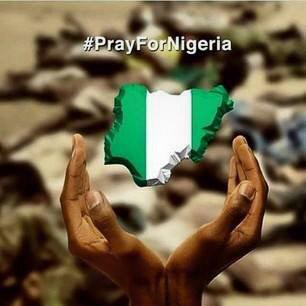
As media coverage focused on the Paris terror attacks last week, more than 2000 Nigerians were reported to have been killed by Islamist militants. What makes one massacre more newsworthy than another?

France spent the weekend coming to terms with last week’s terror attacks in Paristhat left 17 dead. The country mourned, and global leaders joined an estimated 3.7 million people on its streets to march in a show of unity.

In Nigeria, another crisis was unfolding, as reports came through of an estimated 2,000 casualties after an attack by Boko Haram militants on the town of Baga in the north-eastern state of Borno. Amnesty International described as the terror group’s “deadliest massacre” to date, and local defence groups said they had given up counting the bodies left lying on the streets.

Reporting in northern Nigeria is notoriously difficult; journalists have been targeted by Boko Haram, and, unlike in Paris, people on the ground are isolated and struggle with access to the internet and other communications. Attacks by Boko Haram have disrupted connections further, meaning that there is an absence of an online community able to share news, photos and video reports of news as it unfolds.

But reports of the massacre were coming through and as the world’s media focused its attention on Paris, some questioned why events in Nigeria were almost ignored.

On Twitter, Max Abrahms, a terrorism analyst, tweeted: “It’s shameful how the 2K people killed in Boko Haram’s biggest massacre gets almost no media coverage.”

Picture
“I am Charlie, but I am Baga too”
“I am Charlie, but I am Baga too,” wrote Simon Allison for the Daily Maverick, a partner on the Guardian Africa network. “There are massacres and there are massacres” he said, arguing that “it may be the 21st century, but African lives are still deemed less newsworthy – and, by implication, less valuable – than western lives”.

Allison recognises the challenges in reporting – “the nearest journalists are hundreds of kilometres away” – but also points to the significance of the attack: taking control of Baga, “Boko Haram effectively controls Borno state in its entirety. These aren’t just terrorists: they are becoming a de facto state.” Even more reason for the world to take notice.

But the blame does not just lie with western media; there was little African coverage either, said Allison. No leaders were condemning the attacks, nor did any talk of a solidarity movement, he said, adding that “our outrage and solidarity over the Paris massacre is also a symbol of how we as Africans neglect Africa’s own tragedies, and prioritise western lives over our own.”

Silence from Nigeria’s politicians
Many pointed to the palpable silence of many of Nigeria’s politicians. Last week, Nigeria’s president, Goodluck Jonathan, expressed his condolences for the victims of France but stayed silent on the Boko Haram attacks on Baga.

Media analyst Ethan Zuckerman said that the president is “understandably wary of discussing Boko Haram, as it reminds voters that the conflict has erupted under his management and that his government has been unable to subdue the terror group”. Nigeria’s elections are set to take place on 14 February. The president was also criticised for celebrating his niece Ine’s wedding over weekend, in the aftermath of the killings.


Elnathan John, a Nigerian writer and lawyer who has changed his Twitter identityto “I am Baga” in solidarity, shared a tweet from Nigeria’s finance minister, Ngozi Okonjo-Iweala, who also expressed condolences over the Paris attacks but made no mention of the events in Baga.


He also pointed to comments on the official Twitter account of Ahmadu Adamu Muazu, from the ruling People’s Democratic party, who looked to downplay the death toll: “We know it’s a political period so some of this [sic] things are expected”.

Muazu has since taken to the account again to say he has been working with the security services to ensure that “peace will soon be restored” to the people in Baga and other regions in the north-east of the country.

‘The west is ignoring Boko Haram’

Ignatius Kaigama, the Catholic archbishop of Jos in central Nigeria – an area which has also suffered terror attacks – added his voice to criticism of the west.

Speaking to the BBC, he argued that Nigeria could not confront the threat from Boko Haram alone. “It is a monumental tragedy. It has saddened all of Nigeria. But... we seem to be helpless,” he said. “Because if we could stop Boko Haram, we would have done it right away. But they continue to attack, and kill and capture territories... with such impunity.”

Over the weekend Boko Haram was also blamed for a suicide attack in a market in Borno state that left 16 dead in Yobe state. Kaigama called the for international community to show the same spirit and resolve against Boko Haram as it had done after the attacks in France.

#BagaTogetherEchoing the #bringbackourgirls hashtag, which was set up to call for the release of the 200 schoolgirls kidnapped by Boko Haram in April, some have taken to social media to show their support for the people in Baga.

Using a number of hashtags including #BagaTogether, #weareallbaga and #pray4baga, Nigerians and others have posted their support for the affected area. Some objected to disputes over the total death toll, yet to be confirmed, getting in the way of the real issues, some objected to the scant media coverage, others simply called for solidarity.


Sources: The Guardian

Follow Erika Amoako-Agyei: Erika Amoako-Agyei is an intercultural business consultant with regional expertise on the sub-region of Africa. She works with global managers, students and companies expanding into Africa.

Twitter: http://twitter.com/Erika_Amoako
LinkedIn: contact Erika on LinkedIn
Facebook: Africa Business Review Face Page 
Facebook: http://www.facebook.com/AfricaBusinessReview
Website: www. AfricaBusinessReview.net
Website: www.AfricaIntercultural.com
0 Comments

Boko Haram's massacre in Nigeria: what happened and why

1/14/2015

2 Comments

 
Picture
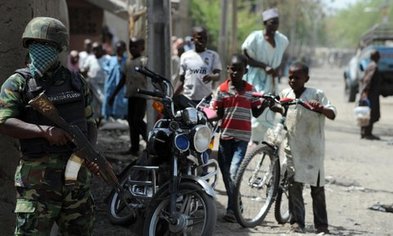
The Nigerian terrorist group Boko Haram launched its worst attack ever in the northeastern town of Baga, where it killed hundreds or possibly more.

The motivation is unclear, but it appears aimed at intimidating Nigerians into not voting in the coming presidential election.

Key context is the military's indifference to northern Nigerian lives. Its troops fled almost immediately, and had itself previously massacred Baga's residents.

What we know about the attackNo one knows for sure how many people the Nigerian terrorist group Boko Haram slaughtered during its six-day rampage in the northeastern town of Baga. A lone and speculative early report said 2,000 dead, though subsequent counts suggest " dozens " or "hundreds ." But there is little question this is a massacre of breathtaking and possibly unprecedented severity, even for Boko Haram. If you zoom out, though, you can see that a crucial part of this story is the Nigerian military's repeated and demonstrated indifference to the lives of northern Nigerians.

Here is what appears to have happened: 

On Saturday, January 3, Boko Haram fighters in pickup trucks drove up to a military outpost in Baga. The Nigerian troops immediately began fleeing; Boko Haram captured the outpost by noon. In the next few days, the group raided surrounding villages, killing civilians. On Wednesday, it overran Baga itself, beginning a days-long process of methodically razing buildings and killing everyone the group saw.

"When they neutralized the soldiers, they proceeded to Baga and started killing everyone on sight," a witness told the New York Times. "There was no pity in their eyes. Even old men and children were killed."

Here is what we know about why they did it: 

It is still not totally clear why Boko Haram so viciously attacked Baga. But the closest thing to evidence of a motive came on Friday. As Boko Haram slaughtered Baga's residents, its fighters visited several nearby villages. They shot villagers, apparently at random, and commanded the survivors not to vote, the Wall Street Journal reports.

Boko Haram condemns democracy itself as religiously forbidden; on Thursday, its leader had released a video ranting against democracy in all its forms, and it has long stated that voting is a crime. Nigeria is in the middle of a presidential campaign and is gearing up for a presidential election on February 14.

The country is roughly split between Muslims and Christians; ironically, Boko Haram's anti-democracy attacks could swing the election in favor of incumbent President Goodluck Jonathan, a Christian, by suppressing turnout among mostly Muslim northern Nigerians who would likely vote against him.

The bigger picture: the Nigerian military's failureLike the larger story of Boko Haram itself, the story of the Baga massacre is a story of Boko Haram's depravity but also of the Nigerian military's abject failure.

It is not just that the Nigerian troops stationed in Baga fled almost immediately on Boko Haram's arrival. The military has itself played a role in Baga's terror. In April 2013, a handful of Boko Haram fighters ambushed some Nigerian troops near Baga. In response, the military stormed Baga, burning down thousands of homes and killing 200 people.

This is wholly consistent with the Nigerian military's conduct in its so-called fight against Boko Haram in northern Nigeria, where the group operates.

The heavy-handed military — which, recall, ruled as dictators not so long ago — has been accused time and again of atrocities in its campaign against Boko Haram. They are typically accused of targeting civilians, but sometimes, they kill out of appears to be simple incompetence. In March 2014, for example, some very brave northern Nigerians alerted the military that Boko Haram was operating near their village. The military did nothing for several days, then bombed the village, killing the very people who'd tried to help, by which time Boko Haram had left.

None of this created Boko Haram, but it helps provide an environment where the group is able to operate more widely and freely than it otherwise could. The military's utter failures, and at times active efforts to commit atrocities, are a crucial component of the Boko Haram story, nationally and in Baga.


Follow Erika Amoako-Agyei: Erika Amoako-Agyei is an intercultural business consultant with regional expertise on the sub-region of Africa. She works with global managers, students and companies expanding into Africa.

Twitter: http://twitter.com/Erika_Amoako
LinkedIn: contact Erika on LinkedIn
Facebook: Africa Business Review Face Page 
Facebook: http://www.facebook.com/AfricaBusinessReview
Website: www. AfricaBusinessReview.net
Website: www.AfricaIntercultural.com

2 Comments

WOOLWORTHS EXPANDS AFRICA FOOTPRINT, WITH A NEW STORE IN GHANA

1/4/2015

0 Comments

 
Picture
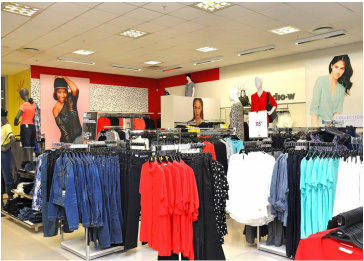
Woolworths has opened a new store in Accra’s upmarket West Hills Mall, the retailer’s second store in Ghana. At 555 square metres the new store is large enough to meet growing Ghana’s demand for Woolworths modern product offerings. The West Hills Mall store stocks a comprehensive range of men’s, women’s and children’s clothing as well as beauty, footwear and accessories.

“We are delighted to be able to meet our customers’ growing expectations and needs by opening a new store in a great location and we are optimistic about our future in Ghana,” said Paula Disberry, Woolworths Group Director, Retail Operations. Ghana remains a compelling growth opportunity for Woolworths. The economy has shown successive year-on-year economic growth, coupled with rising household incomes, increasing urbanisation and a significant emerging middle class.”


Picture
“Woolworths is investing in staff development programmes with an emphasis on growing retail skills.  This is another example of our ongoing commitment to our African business as we become a leading Southern Hemisphere retailer,” added Disberry.


Woolworths opened its ninth store in October 2014 in Namibia at The Grove in Windhoek. The store, which is 2 400 square metres, offers a range of clothing and general merchandise including beauty. In addition, the store is currently the largest food market to date in Namibia at 480 square meters.

Woolworths currently has 63 stores in 11 African countries outside of South Africa including Botswana, Namibia, Lesotho, Swaziland, Ghana, Kenya, Tanzania, Uganda, Zambia, Mozambique and Mauritius. Woolworths will continue to invest in new stores as well as extensions and modernisations on the continent.


Follow Erika Amoako-Agyei: Erika Amoako-Agyei is an intercultural business consultant with regional expertise on the sub-region of Africa. She works with global managers, students and companies expanding into Africa.

Twitter: http://twitter.com/Erika_Amoako
LinkedIn: contact Erika on LinkedIn
Facebook: Africa Business Review Face Page 
Facebook: http://www.facebook.com/AfricaBusinessReview
Website: www. AfricaBusinessReview.net
Website: www.AfricaIntercultural.com
0 Comments

Ghana's cedi, Zambia's kwacha worst African currencies in 2014 

1/1/2015

0 Comments

 
Ghana's cedi and Zambia's kwacha are set to end 2014 as the worst performing African currencies among a small basket that are relatively liquid, as falling commodity prices take a toll on some of the continent's "lion" economies.

The cedi has lost about 27 percent in 2014, one sign of a fiscal crisis in an economy that grew strongly in previous years on gold, cocoa and oil exports. Economic growth in 2015 is seen slowing to 3.9 percent in 2015 from an estimated 6.9 percent this year. The cedi slumped around 40 percent earlier this year but a Eurobond issue, cocoa loan inflows and talks with the International Monetary Fund on a financial assistance programme helped it recoup some losses.

Zambia's kwacha is ending the year on the backfoot amid tax rows with mining houses, a lower growth forecast and a looming election.

At 1030 GMT, commercial banks quoted the currency of Africa's second-largest copper producer at 6.3750 per dollar, bringing its losses over the past three weeks to 3 percent and those for the year to around 15 percent.

Zambia on Tuesday cut its 2014 growth forecast to 6 percent - still brisk by global standards - from a targeted 6.5 percent, citing operational challenges at some mines.

The forecast for the next three years is 7 percent but that may be hard to reach with copper prices near 4-1/2 year lows on mounting worries about growth in China, not to mention brewing rows with mining companies over tax issues.

Finance Minister Alexander Chikwanda said the government intended to resolve the issue of VAT refunds with mining companies and hoped to agree with them on new mining taxes.

He also said the government remained committed to a new mining tax regime that comes into effect on Thursday, which the industry say it can ill afford.

"Investors want to invest in a country whose economy is growing so obviously the lower forecast is bad for the kwacha. Investors are also watching how the elections go," said Lubinda Habazoka, an analyst with the Zambia's Copperbelt University.

Zambia is also withholding $600 million in VAT refunds owed to mining companies and will only repay the cash when companies produce import certificates from destination countries. They say this is impossible because of middlemen in the trade.

The country is due to hold a presidential election on Jan. 20 following the death in October of its leader Michael Sata, and it is unlikely that the tax issue will be resolved before a new administration comes to power.

Nigeria's naira has shed around 13.5 percent this year, South Africa's rand has fallen over 10 percent while the Kenyan and Ugandan shillings have yielded about 4.5 and 9 percent respectively.

Follow Erika Amoako-Agyei: Erika Amoako-Agyei is an intercultural business consultant with regional expertise on the sub-region of Africa. She works with global managers, students and companies expanding into Africa.

Twitter: http://twitter.com/Erika_Amoako
LinkedIn: contact Erika on LinkedIn
Facebook: Africa Business Review Face Page 
Facebook: http://www.facebook.com/AfricaBusinessReview
Website: www. AfricaBusinessReview.net
Website: www.AfricaIntercultural.com
0 Comments

New Game App to Support Literacy in Ebola Ravaged Liberia: Dentist Bird: A West African Folktale

12/23/2014

1 Comment


New Game Rich Picture Book App Dentist Bird: A West African Folktale
Just Released on the AppStore and Google Play for $1.99
Proceeds to Support Literacy Efforts Desperately Needed in Ebola Ravaged Liberia

"100% of all sales will be donated to the We-Care Foundation’s efforts to keep children reading and learning amidst the Ebola outbreak." 
New York, December 17, 2014- The Ebola outbreak put West Africa front and center in the news cycle. In the midst of the “Ebola panic,” the new children’s app, Dentist Bird: A West African Folktale, puts a different, happier, story from West Africa into the hands of young children. It invites children to explore the sights and sounds of Liberia’s rainforest while helping one clever bird cure a crocodile of his terrible toothache. Watch App Trailer.
"Africa is not a country and Liberia is not a virus."
Dentist Bird is available on the AppStore and Google Play for $1.99.  #ReadforLiberia. 100% of all sales will be donated to the We-Care Foundation’s efforts to keep children reading and learning amidst the Ebola outbreak. Schools in Liberia have been closed since July.  Learn more.  

Based on a Liberian folktale How Plover Bird Came to Clean Crocodile’s Teeth retold by Michael Richards and illustrated by Liberian painter David Wolobah, Dentist Bird features music by Emmy-nominated Dora the Explorer composer, Steve Sandberg.

The first in a series of global folktale-inspired apps from app publisher Literary Safari, Dentist Bird harnesses the power of storytelling and gaming to expose children to diverse countries and cultures—starting with Liberia. “During the ‘Ebola panic,’ kids were stigmatized in schools just because they were of African origin. Africa is not a country and Liberia is not a virus. #weneeddiversebooks. Early exposure to diverse folktales can foster an appreciation of the universal ideals and values that connect us all and increase respect of cultural and ethnic differences,” says Sandhya Nankani, founder of Literary Safari.

Literary Safari is partnering with The Rumie Initiative and #eduoverebola to provide the app on tablets being sent to Liberia for use in an education program for children orphaned from Ebola.

App Features:

Read: An interactive West African folktale with embedded gameplay

Play: A story-inspired game set in Liberia’s rich rainforest

Learn: For ages 4+, fun geography and science activities based on the folktale

Plus: Common Core aligned K-3 teacher’s guide, parent’s guide for reading and playing together 

Quick Links:

Dentist Bird on iTunes  | Dentist Bird on Google Play  | www.dentistbird.com

Twitter |  Facebook | Featured in Moms with Apps | Praise from Teachers with Apps

About the Publisher: Literary Safari (www.literarysafari.com) curates, develops, and publishes print and interactive content that support child and adult literacy. It is deeply committed to projects that celebrate authentic voices, textual diversity, multicultural literature, and real-world learning. Dentist Bird is its first app. Contact: [email protected], 347.560.9712

Follow Erika Amoako-Agyei: Erika Amoako-Agyei is an intercultural business consultant with regional expertise on the sub-region of Africa. She works with global managers, students and companies expanding into Africa.

Twitter: http://twitter.com/Erika_Amoako
LinkedIn: contact Erika on LinkedIn
Facebook: Africa Business Review Face Page 
Facebook: http://www.facebook.com/AfricaBusinessReview
Website: www. AfricaBusinessReview.net
Website: www.AfricaIntercultural.com
1 Comment

Mozambique and India Sign MoU for Cooperation in Oil & Gas Sector - by Erika Amoako-Agyei

12/20/2014

0 Comments

 
Picture
Offshore gas discoveries in 2010 in two adjacent offshore blocks have seen the emergence of Mozambique as a significant hydrocarbon rich nation.
Mozambique has signed a Memorandum of Understanding (MoU) with India for cooperation in the oil and gas sector for a period of five years.

This MoU seeks cooperation in oil and gas in both upstream and downstream sectors in the areas of enhancing capacity-building, forging closer cooperation between research and training centers and intensifying technology transfer, among others.

The MoU was signed at a meeting held in New Delhi on Nov. 28th, 2014 between Petroleum Minister Dharmendra Pradhan and Mozambique’s Minister of Foreign Affairs Oldemiro Julio Marques Baloi.


During the ceremony, Pradhan pointed out that “both the countries have traditional links which have grown from strength to strength over the years”.

Last October, India’s union cabinet, chaired by Prime Minister Narendra Modi, gave its approval for signing of the bilateral accord. At the time the government commented, "Mozambique is strategically located near India and is ideally suited for bringing Liquefied natural gas (LNG) to India at market-determined price. Participation of Indian energy companies in the project will facilitate access to LNG for the growing Indian gas market. This project plans to produce 34 million tons of LNG annually from its biggest gas field – the Rovuma Area 1 offshore block of Mozambique."

Three Indian companies - State-run ONGC Videsh Ltd (OVL), Oil India and Bharat Petroleum Corp (BCPL) - have a combined thirty per cent stake in Offshore Area 1 in the Rovuma Basin, off the coast of the northern Mozambican province of Cabo Delgado, where US company Anadarko is the operator.

It is estimated that over 70 trillion cubic feet of natural gas could be recovered from this concession. Huge amounts of gas have also been found in Area 4 by the Italian operator ENI.

Analysts expect that LNG production in Mozambique will begin in 2019 and will increase rapidly over the following years.
The gas reserves will be cooled to produce Liquefied Natural Gas (LNG) which can then be shipped to markets in Asia. Analysts expect that LNG production in Mozambique will begin in 2019 and will increase rapidly over the following years.

Follow Erika Amoako-Agyei: Erika Amoako-Agyei is an intercultural business consultant with regional expertise on the sub-region of Africa. She works with global managers, students and companies expanding into Africa.

Twitter: http://twitter.com/Erika_Amoako
LinkedIn: contact Erika on LinkedIn
Facebook: Africa Business Review Face Page 
Facebook: http://www.facebook.com/AfricaBusinessReview
Website: www. AfricaBusinessReview.net
Website: www.AfricaIntercultural.com
0 Comments

Zimbabwe's Mugabe sacks Vice-President Joice Mujuru over 'plot'

12/9/2014

0 Comments

 
President Robert Mugabe of Zimbabwe has sacked his vice-president, Joice Mujuru, after accusing her of corruption and plotting to kill him.

Mr Mugabe also dismissed seven government ministers in connection with the alleged plot, a statement said.

Mrs Mujuru, once seen as a possible future leader of Zimbabwe, has denied plotting against the president.

State media and Mr Mugabe's wife, Grace, have conducted a campaign against her for months.

"President RG Mugabe has exercised his executive powers to release the Honourable Joice Mujuru… with immediate effect," said a statement issued by chief secretary to the cabinet Misheck Sibanda.

Mrs Mujuru's conduct had been "inconsistent with the expected standard", it said.

'Web of lies'The ministers whose sacking was announced on Tuesday included State Security Minister Didymus Mutasa - another long-time ally of Mr Mugabe - and Energy Minister Dzikamai Mavhaire, who was seen as close to Mrs Mujuru.

There was no immediate word on replacements.The sackings come a week after Mr Mugabe denounced his vice-president at a party congress and removed her from her post in the ruling party, Zanu-PF.

Mrs Mujuru responded on Tuesday by saying her loyalty to Mr Mugabe was "unquestionable" and it was "repugnant" and "ridiculous" to suggest she had plotted to kill him or wanted to remove him from office.

She said Zimbabwe's state media had "continued to publish malicious untruths" about her and that she had "become the fly in a web of lies whose final objective is the destruction of Zanu-PF".

'Treachery'Her accusers, she said, had produced "not a single iota of evidence" against her.

Grace Mugabe has conducted a three-month campaign against Mrs Mujuru
Mr Mugabe, 90, has been in power since Zimbabwe's independence in 1980. He is due to stand for election again in 2018.

Mrs Mujuru fought alongside him in the 1970s guerrilla war against white-minority rule and had been thought a possible successor as president.

But correspondents say her career ran into trouble when Mr Mugabe's wife entered politics earlier this year.


Analysis - By Brian Hungwe, BBC News, Harare


Mrs Mujuru's sacking was not a huge surprise. She has been under siege for the past three months and her relationship with Mr Mugabe had broken down.

Grace Mugabe has been spewing vitriol at public rallies, telling the vice-president to resign or apologise. Mrs Mujuru has dug in despite the gravity of the allegations.

Now her sacking is official, the public eagerly await her next move.

She appears ready to face the consequences of the situation - but her options are limited. She is damned if she leaves the party, damned if she stays.

Her supporters may press her to join the opposition trenches. That could be dangerous, given the threats by Mr Mugabe of imminent arrest. The intelligence services are known to keep files of "dirt" for use against those who defect.

If she stays, she will be a diminished and disparaged figure, likely to demoralise those allies who would be prepared to leave with her.


Mrs Mugabe repeatedly accused Mrs Mujuru of plotting against her husband and Mr Mugabe told delegates at the party congress that he welcomed his wife's action to expose the alleged treachery.

Grace Mugabe, 49, once her husband's secretary, is now a senior party figure, having been appointed leader of Zanu-PF's women's wing last week.

Speculation is building that she may seek to succeed Mr Mugabe when he retires or dies.

Correspondents say another prominent figure expected to benefit from the political demise of Mrs Mujuru is the veteran Justice Minister, Emmerson Mnangagwa.

0 Comments

West African mining projects hit hard by Ebola crisis

12/4/2014

0 Comments

 
  • The Ebola epidemic in west Africa has led mining companies in the region to put expansion plans on hold, delaying the rollout of jobs meant for residents of the countries hardest hit by the virus.
  • ArcelorMittal (NYSE:MT) has delayed a $1.7B expansion at its iron ore mine in Liberia, Rio Tinto (NYSE:RIO) has stopped work on a $20B iron ore mine in Guinea, and Sierra Leone-focused London Mining filed for bankruptcy last month after falling iron ore prices and Ebola concerns hampered its ability to attract financing.
  • It wasn’t supposed to be like this: Guinea holds two-thirds of the world’s bauxite reserves as well as massive iron ore deposits, while Liberia and Sierra Leone boast troves of diamonds, gold and iron ore.
  • Officials worry the pullback could set development back by a decade in a region that only recently escaped a cycle of war and political turmoil.


Source: Seeking Alpha


Follow Erika Amoako-Agyei: Erika Amoako-Agyei is an intercultural business consultant with regional expertise on the sub-region of Africa. She works with global managers, students and companies expanding into Africa.

Twitter: http://twitter.com/Erika_Amoako
LinkedIn: contact Erika on LinkedIn
Facebook: Africa Business Review Face Page 
Facebook: http://www.facebook.com/AfricaBusinessReview
Website: www. AfricaBusinessReview.net
Website: www.AfricaIntercultural.com

0 Comments

The Financial Impact of the Ebola Crisis - Special feature by Gemma Green

12/4/2014

0 Comments

 
The world has woken up to the devastating effects of Ebola in West Africa. International aid organisations have committed funding and resources to the region. The US has deployed a 4,000 strong military contingent to set up blood testing laboratories so that people infected with the Ebola virus can be distinguished from those with malaria or influenza. While it seemed for a long time that the international community was paying little attention to the crisis, the appearance of cases in Spain and the US, including the death of one Liberian man in Texas, brought home to many authorities the real risk of the disease spreading around the world.

Personal and financial insecurity

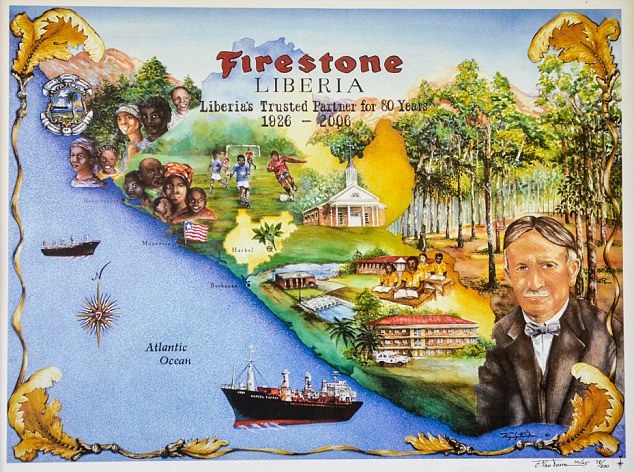
In West Africa, fear of infection has had a profound effect on the overloaded health systems and on daily life: people avoid physical contact, and families hit by the infection become socially isolated. In Liberia, the giant Firestone rubber plantation near Monrovia has seen at least 57 people—workers and their families living in and around the plantation—die of the disease. Surviving family members are entitled to only a $1,600 one-off payment (around 18 months’ wages), $300 for removing and disposing of the body, plus a bag of rice. They are ordered off the plantation. Orphaned children hanging around waiting to be paid feel the pressure to leave, though they have nowhere to go.

This is just one example of the social and financial impact that the Ebola outbreak has had on its victims and on businesses in the region. Of course, the workers suffer death, bereavement, isolation and an uncertain future, while businesses are only inconvenienced by the temporary manpower shortage and minimal payouts. Some of the bereaved have to move on before they can receive any benefits. President of the Firestone Agricultural Workers Union of Liberia, Austin Natee, complained that the labour laws favour the company and there are no workers’ pensions. In the company’s defence, Firestone director Edmundo Garcia said that they had been praised by the U.S. Center for Disease Control for its quick and effective response to the outbreak, and that at no time has the company considered closing the plantation as thousands of people rely on them for their livelihoods.

Travel restrictions

Tourism inevitably declines following any outbreak of a contagious disease. In Sierra Leone, military and police roadblocks have been set up to restrict movement, which adversely affects the supply of food and other goods. The commercial banks have cut their opening hours and some hotels have been empty since the summer. Several African states have restricted or banned travel from countries affected by the Ebola outbreak, and some airlines, including Kenya Airways, Emirates and British Airways have suspended all flights. Most travel insurance policies don’t include restrictive clauses for Ebola. Health insurance payouts for Ebola are unlimited, and unless governments advise against travel to a country, insurance claims for Ebola are unlikely to be excluded. However, fear of the disease inevitably affects the numbers of people willing to travel to West Africa. Border closures and travel restrictions throughout the region severely limit the import and export of goods as well as depleting tourist income, and tightening escape routes put pressure on multinational companies to withdraw.

A bleak outlook

The deepening crisis was at the top of the agenda when the IMF and World Bank met in October 2014. Its ramifications go far beyond concerns over public health, with the threat of an economic catastrophe in West Africa that could affect an entire generation. The three worst affected West African countries—Liberia, Sierra Leone and Guinea—all have fragile economies that the World Bank estimated could be hit by a $36.2 billion deficit be the end of 2015 if the Ebola outbreak cannot be controlled. Liberia, whose economy was recovering after 11 years of civil war, is now almost paralysed by the crisis with a rising budget deficit that will inevitably lead to the halting of critical funding to infrastructure projects. Foreign investors need to be reassured that investment is still viable in West Africa, despite the evacuation of foreign staff and the partial shut-down of operations by several big mining companies, and the scaling down of iron ore shipments from Liberia by China Union. These results of the crisis will be reflected in the inevitable economic slowdown, with a resulting decrease in tax revenues, increased borrowing and government expenditure. The crisis-hit agricultural sector will result in food shortages and price rises, with inflation caused by panic buying.

Huge sums of money will be spent by governments and NGOs to contain the outbreak and care for the sick and dying, but in purely monetary terms the cost to the economies of the affected countries will be far greater. Confusion and panic only adds to the disruption. Past outbreaks of deadly diseases, such as the 2003 Severe Acute Respiratory Syndrome (SARS) outbreak show that they always provoke over-reaction. According to the World Health Organisation (WHO) Situation Report published in September 2014, Ebola’s fatality rate varies between countries and is difficult to assess, but is probably closer to the average of 53% calculated from collating the reports from all affected countries than the usually quoted figure of 90% seen in previous outbreaks. Governments have to tread carefully between working to limit the spread of Ebola, causing disruption to the economy by necessary restrictions on movement, and avoiding panic. This is best achieved by being open about the problem and the degree of success, and in encouraging a constructive and unified response from the public and businesses.

Credit: Freelance article by Gemma Green

Disclaimer: The views & opinions expressed in any guest feature article on our site are those of the guest author and do not necessarily reflect the opinions & views of Africa Business Review.


Follow Erika Amoako-Agyei: Erika Amoako-Agyei is an intercultural business consultant with regional expertise on the sub-region of Africa. She works with global managers, students and companies expanding into Africa.

Twitter: http://twitter.com/Erika_Amoako
LinkedIn: contact Erika on LinkedIn
Facebook: Africa Business Review Face Page 
Facebook: http://www.facebook.com/AfricaBusinessReview
Website: www. AfricaBusinessReview.net
Website: www.AfricaIntercultural.com
0 Comments

Culture: Ebola's impact on Greetings in Nigeria by Erika Amoako-Agyei

8/14/2014

3 Comments

 
Picture
Picture
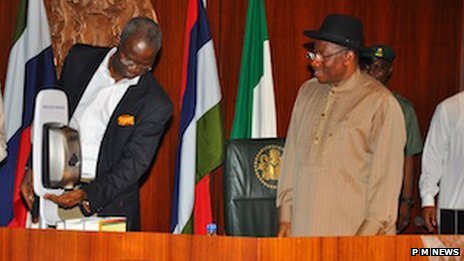
The governors of Nigeria's 36 states have started greeting one another with clenched fist salutes - not out of revolutionary fervor, but to avoid transmitting the deadly Ebola virus.

Ever since the health authorities began a sensitization program on the Ebola virus, Nigerians have been discouraged from shaking hands to avoid infection. The advisory has led to several Nigerians pointedly avoiding physical contact with their friends and associates.

President Goodluck Jonathan summoned the governors and regional health commissioners to an emergency meeting in the capital, Abuja, to discuss how to stop the spread of Ebola, and the governors "opted to greet one another with clenched fists", a local newspaper reports, quoting the official News Agency of Nigeria.

The health ministry's Ebola awareness program is discouraging Nigerians from shaking hands to avoid further infection, and the clenched fist is the latest in a series of changes people are making to avoid physical contact. Members of Parliament (MPs) stopped shaking hands earlier this week, and even the Catholic Church has reviewed its 'Sign of Peace' gesture of shaking hands with your neighbor during Mass.

Three people have died of Ebola in Nigeria since it arrived in late July, and 10 more have been diagnosed with the disease. Many Nigerians who had initial contact with carriers have been quarantined, and several others are under observation. At their meeting with the president, the governors agreed to set up seven laboratories nationwide to test for Ebola, and upheld a decision to ban the movement of corpses from state to state without a waiver from the federal ministry of health and proper safeguards.

Scientists at Aberystwyth University in Wales have established that shaking hands is one of the most effective ways of passing on bacteria, and recommend 'fist-bumping' as a much less risky way of greeting if people don't want to avoid physical contact altogether.


Follow Erika Amoako-Agyei: Erika Amoako-Agyei is an intercultural business consultant with regional expertise on the sub-region of Africa. She works with global managers, students and companies expanding into Africa.

Twitter: http://twitter.com/Erika_Amoako
LinkedIn: contact Erika on LinkedIn
Facebook: Africa Business Review Face Page 
Facebook: http://www.facebook.com/AfricaBusinessReview
Website: www. AfricaBusinessReview.net
Website: www.AfricaIntercultural.com
3 Comments
<<Previous
Forward>>

    Categories

    All
    31st December Women's Movement
    Africa
    Africa Facebook
    Africa ICT
    African Apps
    African Currency
    Africa Rising
    Africa Straight Up
    Africa Straight Up Documentary
    Africa Video
    Arab Spring
    Cedi
    Dentist Bird
    Drc
    Dr Congo
    Ebola
    #eduoverebola
    Egypt
    Erika Amoako-Agyei
    Firestone Liberia
    Ghana Retail
    Girl-child
    His Day Is Done
    Ict
    Kenya
    Kwacha
    Kwame Nkrumah
    Liberia
    Literacy
    Literacy In Liberia
    Madiba
    Maya Angelou
    Multi Media University
    Namibia
    Nana Konadu Agyeman-Rawlings
    Nelson Mandela
    Ongata Rongai
    #ReadforLiberia
    Sap Africa
    Thunderbird For Good
    Thunderbird School Of Global Management
    Tribute Poem
    #weneeddiversebooks
    West African Folktale
    Windhoek
    Woolworth's Africa
    Zambia

    Author

    Erika Amoako-Agyei is an experienced intercultural trainer & consultant, working with global companies, schools and organizations expanding into Africa. Her company is Africa Intercultural Consulting. She specializes in cross-cultural training with a focus on business communications. For nearly a decade, she worked internationally for the IBM Corporation, including several years in Ghana, Nigeria, Sierra Leone, South Africa, Gambia, Liberia and other countries as a Regional Manager.

    Archives

    December 2015
    October 2015
    June 2015
    January 2015
    December 2014
    August 2014
    July 2014
    April 2014
    February 2014
    January 2014
    December 2013
    October 2013
    July 2013